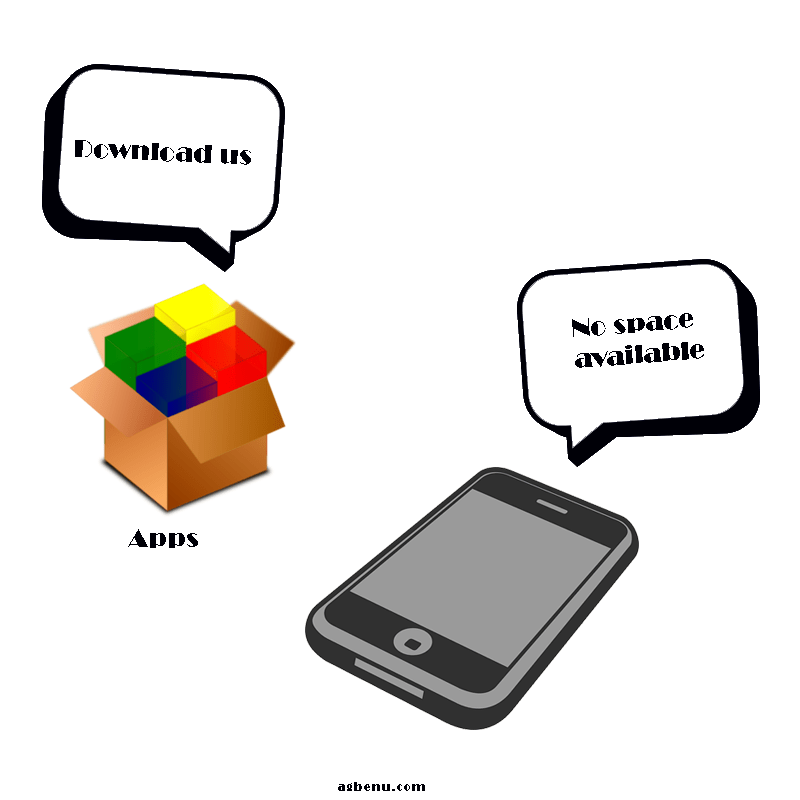
Nobody downloads apps anymore. It’s a truth that app developers have to start accepting. The obvious questions then becomes “why don’t people download more apps these days?” The last sentence contained one word with the answer. The answer is in the word “more”.
More apps means more space is consumed on the users’ phone. This means the user’s interests would have to be forgone in place of having another app.
Just recently, my conversation over premier league scores highlighted how the average mobile phone user felt about this subject. Just a heads up, we spoke in pidgin. And by the way, if you didn’t already know, everybody in Ghana is informally referred to as Charlie( It sounds more like Charley );
Me: Charlie what’s up?
Him: Cool things.
Me: Charlie, I hear say them play the EPL (English Premier League ) matches. I beg flow me the scores.
Him: ( He mentions teams who won and the goal margins )
Me: Charlie, what’s the app again. Who score the goals. I dey play FPL (Fantasy Premier League), so I wan know who score.
Him: (He mentions players who scored)
Me: Ouch, this game week I sell that player. Edey pain.
Him: Hahaha
Me: Why you dey use the site. I know that site has an app, right?
Him: Yes.
Me: So why are you going to the site.
Him: I no wan chaw apps for my phone top. I no wan consume my phone space
Me: Ok. I dey barb. Alright, later time.
That’s how so many other people feel, when I speak to them. They all said apart from the core (and popular) apps that they need, anything else they simply look up online. Occasionally, they might download the budget app or another app to help them with a particular task. However when they are done, they proceed to delete the app. It is becoming increasing difficult to convince people to download the app. And even more difficult to have people not delete the app after they have downloaded it.
This trend sends warning signals to someone like me who develops android apps from time to time. For I have to think, what is the future of mobile, and also the relevance of this skill set. If this is the trend to stay, then what other skill set should be added to make you remain in demand. At least for the foreseeable future.
Enter PWA. PWA means progressive web apps. Right now that looks like the only response to this downward spiral. Here you have a mobile app that is not downloaded, but accessed via a web browser. After wards you can add a shortcut that you can keep accessing from your mobile screen home page. It has the ability for offline storage and access of your app data.
PWAs are made of HTML and CSS. Nothing fancy. No app space consumed. Just access it through a web browser. However know that mobile apps won’t die today. If for nothing else enterprise organizations are going to need mobile apps for a while. Forget whether it is built with hybrid or native. It doesn’t matter. Enterprise companies are going to need apps to further their corporate ambitions. After all, they want to be close to their customers. And what isn’t as close to the user than his smart phone.
PWA is a strategy to make sure you don’t spend enormous time making your product exclusively accessible through the play store. Make it accessible online as well. In fact forget the last statement. Make it accessible first on the web before the play store.
The number of apps and sites adopting this approach is growing. I recommend you take a week to check out tutorials, and try building the sample weather app. This exercise would not kill you. Actually, it looks like this exercise is the only thing that can kick start your journey to save your app’s waning downloads.
Wishing you more success in your apps endeavor. Until later, cheers.
 Eli Agbenu
Leave a comment